Sinopsis
Foreign policy podcasts hosted by Mark Leonard, Director of the European Council on Foreign Relations (ECFR), the first pan-European think-tank.
Episodios
-
![The new German coalition’s roadmap for foreign policy]()
The new German coalition’s roadmap for foreign policy
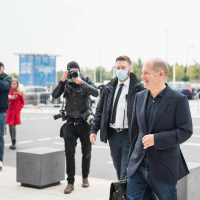
26/11/2021 Duración: 32minOn Wednesday afternoon, the German Social Democrats, the FDP and the Greens presented their coalition agreement. The long-awaited deal sets out the roadmap for the “traffic light” government for the upcoming four years led by Olaf Scholz (SPD). In this episode, Mark Leonard and ECFR senior policy fellows Janka Oertel and Jana Puglierin take a deep dive into the 170+ page-long document: what does it say about foreign policy issues, China, defence and security? What is in there about the future of Europe? And how do we see the transatlantic relationship developing in the new coalition?This podcast was recorded on 24 November 2021Further reading:Coalition treaty [in DE]: https://buff.ly/2ZpvyIt Germany announces coalition agreement | DW News Live: https://buff.ly/3cOmBeCWhat’s in the German coalition deal for Europe (and the UK) | Politico: https://buff.ly/3cQX6tepicture (c) Paul Lovis Wagner | Campact Hosted on Acast. See acast.com/privacy for more information.
-
![The Russian troop build-up near Ukraine]()
The Russian troop build-up near Ukraine
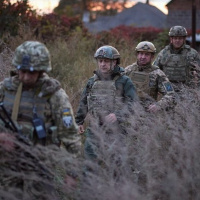
19/11/2021 Duración: 34minAt the beginning of this week, NATO warned about an ‘unusual’ concentration of Russian forces close to the Ukraine border. So far, the Kremlin has dismissed the warning as “alarmist” while the US alerted allies about the possibility of Moscow preparing for a possible invasion of Ukraine. Mark Leonard is joined by Marie Dumoulin the new director of our Wider Europe programme, in her first week on the job, and ECFR Senior policy fellows Gustav Gressel and Kadri Liik to talk about the Russian military built up on Ukraine´s borders: how serious is the situation? And what should - and should not NATO do about it?This podcast has been recorded 17 November 2021.Further reading:Russia’s military movements: What they could mean for Ukraine, Europe, and NATO by Gustav Gressel https://ecfr.eu/article/russias-military-movements-what-they-could-mean-for-ukraine-europe-and-nato/ Bookshelf:• “Ukraine: Putin’s unfinished business” by Eugen Rumer & Andrew Weiss • “Russia in Global Affairs“, Volume 19, No. 3, Jul-Sept 20
-
![How migration became a weapon: the Belarus-Polish border crisis]()
How migration became a weapon: the Belarus-Polish border crisis
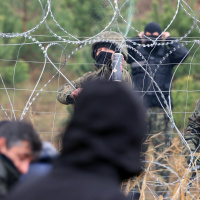
12/11/2021 Duración: 27minIn the recent months, the EU and especially Poland, Lithuania and Latvia, have all seen an increasing number of people trying to enter their countries from Belarus. An estimated 2,000 migrants are said to be stranded at the Belarus border with Poland at the moment. But how did we get here? Host Mark Leonard talks to ECFR policy fellow Pawel Zerka and visiting fellow Pavel Slunkin about the situation on the ground. Moreover, we asked Kelly Greenhill, 2020-21 Leverhulme Trust visiting professor at SOAS, to explain what coercive engineered migration is and how successful it is. Is Belarus’s president Alexander Lukashenka’s act of revenge for EU sanctions and criticism working? What would be the best way for the EU to respond to Minsk’s tactics? This podcast was recorded on 10 November 2021.Further reading:• "No quiet on the eastern front: The migration crisis engineered by Belarus" by Gustav Gressel, Joanna Hosa & Pavel Slunkin: https://buff.ly/3EYVidF • "How half-hearted sanctions put the future of Belarus
-
![COP26 and Europe’s green grand bargain]()
COP26 and Europe’s green grand bargain
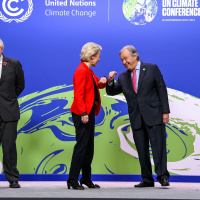
05/11/2021 Duración: 29minNegotiations of the 26th Conference of the Parties to the United Nations Framework Convention on Climate Change (COP26) are underway in Glasgow. This week, host Mark Leonard speaks with Lykke Friis, ECFR board member and director of the Danish Think Tank Europa and former minister for climate and energy of Denmark; Susi Dennison, head of ECFR’s European power programme; and Alex Clark, researcher at the Smith School of Enterprise and the Environment at the University of Oxford and ECFR visiting fellow. Together, they analyse the prospects of success at COP26 and particularly what role the European Union can and should play. Is the EU in a position to deliver a green grand bargain, or is its role as peripheral now as it was at COP15? This podcast was recorded on 3 November 2021.Further reading;Climate of cooperation: How the EU can help deliver a green grand bargain by Alex Clark, Susi Dennison, and Mats Engström: https://buff.ly/3BrI9HPLast chance for Global Climate Leadership in Glasgow? Event with Lykke Fri
-
![Ask the author anything! - Mark Leonard on The Age of Unpeace]()
Ask the author anything! - Mark Leonard on "The Age of Unpeace"
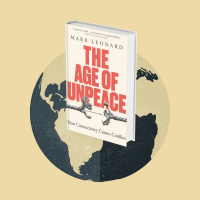
29/10/2021 Duración: 34minThis week, Mark Leonard answers your most burning questions about his newly released book, “The Age of Unpeace: How Connectivity causes Conflict”. Hosted by ECFR’s head of communications, Ana Ramic, the special Ask Me Anything episode features Mark responding to loyal podcast listeners Zebulon Carlander, Robert Cooper, Teresa Gouveia, Antonio Notario, Jonas Parello-Plesner, Timi Okoya, and Patrycja Sasnal. This episode was recorded on 22 October 2021 **and contains spoilers**! Thanks to everybody who submitted questions! Listen to a sneak-peak: https://soundcloud.com/ecfr/sneak-peek-age-of-unpeace-mark-leonard Learn more about “The Age of Unpeace”: • Podcast with Mark Leonard & Janka Oertel: https://soundcloud.com/ecfr/age-of-unpeace• "Welcome to the age of unpeace" by Mark Leonard in Politico https://www.politico.eu/article/welcome-to-the-age-of-unpeace-geopolitics-conflict/ Get the book here: https://www.penguin.co.uk/books/144/1443237/the-age-of-unpeace/9781787634657.html#:~:text=The%20%22age%20of%2
-
![French connection: Macron’s plans for Europe]()
French connection: Macron’s plans for Europe
22/10/2021 Duración: 32minLast week, French president Emmanuel Marcon presented a massive investment plan – “France 2030”. The roadmap sketches out France’s digital and green transformation and is meant to set up the country – as well as Europe – for growth and success ahead of the French EU Council presidency. But is this strategy only part of electoral campaigning, as critics say? Or does “France 2030” echo bigger plans which the EU has already set out for the bloc? Host Mark Leonard is in our Paris office talking to office head and ECFR policy fellow Tara Varma: What are Macron’s plans for the EU Council presidency in 2022 and beyond? Can France fill the void that Germany leaves post-Merkel while forming a new government, and how?This podcast was recorded on 19 October 2021.Further reading:- The lonely leader: The origins of France’s strategy for EU foreign policy” by Tara Varma and Mathilde Ciulla: https://ecfr.eu/article/the-lonely-leader-the-origins-of-frances-strategy-for-eu-foreign-policy/ Bookshelf:- Peut-on changer de logiqu
-
![Out of Order: the Polish Constitutional Court’s challenge to the European Union]()
Out of Order: the Polish Constitutional Court’s challenge to the European Union
15/10/2021 Duración: 33minA major ruling of Poland’s Constitutional Court challenging the primacy of EU law has escalated Warsaw’s legal and political dispute with Brussels and unleashed serious concerns of a ‘Polexit.’ In this week’s episode, host Mark Leonard speaks with Piotr Buras, head of ECFR’s Warsaw office, and Jana Puglierin, head of ECFR’s Berlin office, about the implications of the ruling for Poland as well as for the European Union. Should the EU fear ‘Polexit’? What steps can the EU take to defend its legal order and protect the authority of the Court of Justice of the European Union?This podcast was recorded on 14 October 2021.Further reading:Forget Polexit – the EU must defend the CJEU by Piotr Buras on Balkan Insight: https://buff.ly/3FA2Ftj Bookshelf: - Aftershocks: Pandemic politics and the end of the old international order by Colin Kahl and Thomas Wright- Angela Merkel: Die Kanzlerin und ihre Zeit by Ralph Bollmann- The Age of Unpeace: How Connectivity causes Conflict by Mark Leonard Hosted on Acast. See acast.co
-
![Europe’s role in a post-American Middle East]()
Europe’s role in a post-American Middle East
08/10/2021 Duración: 38minAs the US looks to disentangle itself from various conflicts globally, it leaves behind power vacuums. In the MENA region, various regional – and global - powers are vying to fill the void. In this week’s episode, host Mark Leonard is joined by three guests directly from ECFR’s MENA Forum in Rome: Abdulkhaleq Abdulla, professor of political science in the UAE; Alia Moubayed, MENA chief economist for Jefferies; and Julien Barnes-Dacey, head of ECFR’s MENA programme. Together, they analyse the changing geopolitical and regional dynamics in the MENA region: Who is filling the vacuum which the US is increasingly leaving behind? How are regional actors reacting to US disengagement? And what does this mean for Europe’s future role in the region? This podcast was recorded on 5 October 2021.Further reading: - Iraq’s parliamentary election will produce more of the same by Nussaibah Younis: https://buff.ly/3A5xORd - Europe’s post-Afghanistan to-do list by Arancha Gonzalez Laya: https://buff.ly/3AHJyuC- Autonomous in A
-
![Germany’s election result and what it means for Europe]()
Germany’s election result and what it means for Europe
01/10/2021 Duración: 37minGerman election results are in, and they mark a new era for Germany. On 26 September, Germans headed to the polls to vote in one of the most unpredictable elections since Angela Merkel took office over a decade and a half ago. Now, Germany will have to endure weeks – or possibly months – of fraught coalition talks before a new government can be formed. In this week’s World in 30 Minutes episode, host Mark Leonard talks with Jeremy Cliffe, international editor of the New Statesman, Jana Puglierin, head of ECFR’s Berlin Office, Lykke Friis, ECFR co-chair and Director of the Danish Think Tank Europa, and Sylvie Kauffmann, editorial director of Le Monde, about the fragmented election result and its implications for Europe. What coalition – the ‘traffic light’, ‘Jamaica’ or ‘grand’ – is most likely? How are the results being perceived throughout Europe? And what do they mean for the future of our continent? This podcast was recorded on 29 September 2021.Bookshelf: -How Olaf Scholz and the SPD could lead Germany’
-
![The transatlantic meaning of AUKUS]()
The transatlantic meaning of AUKUS
24/09/2021 Duración: 33minThe announcement of the new Indo-Pacific security alliance between Australia, the United Kingdom, and the United States - dubbed ‘AUKUS’ - has led to the biggest crisis in transatlantic relations since the Iraq war in 2003. In this week’s podcast, host Mark Leonard talks with Janka Oertel, head of ECFR’ Asia programme, Jeremy Shapiro, ECFR’s research director, and Tara Varma, head of ECFR’s Paris office, about the new security pact and its implications for Europe. What does it mean for the future of transatlantic relations? And what lessons can be drawn for European strategic autonomy and European sovereignty? This podcast was recorded on 20 September 2021.Further reading:- What Europeans think about the US-China cold war by Ivan Krastev & Mark Leonard: https://buff.ly/3hT6Iqa- After AUKUS: The uncertain future of American and European cooperation in the Indo-Pacific by Tara Varma: https://buff.ly/3CC3I9S- AUKUS: After the sugar rush by Nick Witney: https://buff.ly/3zyho3zBookshelf: - NüVoices - Podcast-
-
![Sneak Peek | The Age of Unpeace: How Connectivity Causes Conflict]()
Sneak Peek | The Age of Unpeace: How Connectivity Causes Conflict
17/09/2021 Duración: 16minGet a sneak peek into Mark Leonard's latest book "The Age of Unpeace - How Connectivity Causes Conflict", read by the author himself.Additionally, in October we will have a special “ask me anything” episode with Mark Leonard and ask all of you to send in your burning questions about the book to mark.leonard@ecfr.eu which will then be answered in the forthcoming episode.All those who submit questions will be eligible to win a free signed book from Mark, so start emailing! We are happy to receive your questions in written or audio (voice-memo) form. Hosted on Acast. See acast.com/privacy for more information.
-
![The Age of Unpeace]()
The Age of Unpeace
17/09/2021 Duración: 29minIn his newly released book “The Age of Unpeace: How Connectivity causes Conflict” ECFR director Mark Leonard explains how many of the forces that we thought would bring us together have ended up driving us apart. Trade, technology, the internet, and travel were once promised to create a global village but have instead created an era of “unpeace”, where the distinctions between war and peace are breaking down.In this week’s episode, Mark Leonard becomes the guest of his own podcast to talk with ECFR’s Asia programme director Janka Oertel about the main themes of his book and particularly how China’s growing role in this interconnected world poses threats for Europe.This podcast was recorded on 16 September 2021.Further reading:Age of Unpeace by Mark Leonard“The Afghan tragedy and the age of unpeace” by Mark LeonardBookshelf:“Doom” by Neil Ferguson“Shutdown. How Covid Shook the World’s Economy” by Adam ToozeMove by Parag Khanna“Renewal: From crisis to transformation in our lives, work, and politics” by Anne Mar
-
![The fall of the Afghan government and what it means for Europe]()
The fall of the Afghan government and what it means for Europe
10/09/2021 Duración: 35minThe collapse of Afghan government forces and the rapid seizure of power by the Taliban has unleashed a series of intense debates about the implications for Europe. How will the Western withdrawal impact on the state of European defence and military capabilities? Are we likely to see a shift in Europe’s relationship with other powers - such as Turkey, China, and the United States? In this week’s podcast, host Mark Leonard talks with Jeremy Shapiro, ECFR’s research director, and senior policy fellows Asli Aydintaşbaş and Andrew Small about what the withdrawal of Western forces from Afghanistan means for Europe and the future of transatlantic relations.This podcast was recorded on 8 September 2021.Further Reading:- “The fall of the Afghan government and what it means for Europe” by ECFR policy experts: https://buff.ly/3kqkOjh - “The Afghan tragedy and the age of unpeace” by Mark Leonard: https://buff.ly/3gXZTmSBookshelf:"Age of Unpeace" by Mark Leonardhttps://www.penguin.co.uk/books/144/1443237/the-age-of-unpea
-
![Introducing Mark Leonards World in 30 Minutes | Trailer]()
Introducing Mark Leonard's World in 30 Minutes | Trailer
06/09/2021 Duración: 01minEvery Friday, Mark Leonard invites top-level speakers from across the EU and beyond to debate Europe’s role in the world. We feature and discuss everything from our own research at ECFR to practical pan-European policy – and news from Africa, Asia, Middle East and North Africa, Wider Europe and our own European Power programme. So basically, we bring you the world – in 30 minutes. Hosted on Acast. See acast.com/privacy for more information.
-
![CDU foreign policy post-Merkel]()
CDU foreign policy post-Merkel
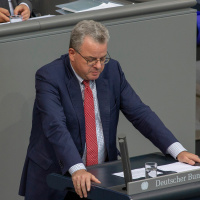
03/09/2021 Duración: 37minWith Germany’s federal elections rapidly approaching, chancellor Angela Merkel is set to depart the political stage. What will the foreign policy of her party, the CDU, look like when she’s gone? In this week’s podcast, host Mark Leonard talks to ECFR senior policy fellow Ulrike Franke and Andreas Nick, a CDU member of the German Bundestag. How would a chancellor Armin Laschet approach China, Russia, and defence? And what exactly sets the CDU’s foreign policy apart from those of the Social Democrats or the Greens? This podcast was recorded on 1 September 2021.Further Reading: ECFR German Election 360https://ecfr.eu/topic/german-election-2021/ Bookshelf: “Age of Unpeace: How Connectivity Causes Conflict” by Mark Leonard https://www.penguin.co.uk/books/144/1443237/the-age-of-unpeace/9781787634657.html “Has China Won?” by Kishore Mahbubani https://www.publicaffairsbooks.com/titles/kishore-mahbubani/has-china-won/9781541768123/ “From Cold War to Hot Peace” by Michael McFaul https://fsi.stanford.edu/content/cold-w
-
![Kyiv’s relations with Europe in the age of Nord Stream 2]()
Kyiv’s relations with Europe in the age of Nord Stream 2
30/07/2021 Duración: 35minUkraine and the EU recently opened a new chapter in their strategic relationship by signing a memorandum of understanding for closer cooperation in raw materials, green and digital technologies. Making Ukraine part of the European value chain is of strategic importance, but where does the country stand on the recent US-German deal on Nord Stream 2? In this week’s episode, guest host Joanna Hosa, deputy director of ECFR’s Wider Europe programme talks with Svitlana Zalishchuk, Deputy Prime-Minister Foreign Policy Advisor and former Member of Parliament in Ukraine and ECFR senior policy fellow Andrew Wilson about Ukraine, its domestic and international outlook and what the EU can and should do to support Ukrainian sovereignty. This podcast was recorded on 29 July 2021. Further reading: “Faltering fightback: Zelensky’s piecemeal campaign against Ukraine’s oligarchs” by Andrew Wilson https://ecfr.eu/publication/faltering-fightback-zelenskys-piecemeal-campaign-against-ukraines-oligarchs/ Bookshelf: “Civilisations
-
![The geopolitics of technology]()
The geopolitics of technology
23/07/2021 Duración: 36minThe EU is often described as a “regulatory superpower” benefitting from the so-called “Brussels effect.” But is the bloc also able to set its own rules and standards when it comes to new technologies, and let the rest of the world adapt? This week, host Mark Leonard is joined by ECFR senior policy fellows Ulrike Franke and Jose Torreblanca, as well as Marietje Schaake, international director of policy at Stanford’s Cyber Policy Center. How ready are Europeans to prevail in a world of fierce geopolitical tech competition? And what role does Europe play in the Sino American competition?This podcast was recorded on 16 July 2021.Further reading:· “Geo-tech politics: Why technology shapes European power” by Ulrike Franke & José Ignacio Torreblanca https://ecfr.eu/publication/geo-tech-politics-why-technology-shapes-european-power/· “Europe’s digital sovereignty: From rulemaker to superpower in the age of US-China rivalry” by Carla Hobbs (ed.) https://ecfr.eu/publication/europe_digital_sovereignty_rulemaker_supe
-
![A social democratic vision of German foreign policy]()
A social democratic vision of German foreign policy
16/07/2021 Duración: 35minWith Angela Merkel stepping down as Chancellor, the next German federal elections scheduled for this September promise to mark a turning point for Germany. Foreign policy issues promise to be a crucial part of the election campaign. In this week’s podcast, host Mark Leonard talks to Niels Annen, Minister of State in the German Federal Foreign Office and member of the Bundestag for the SPD to find out what a social-democratic foreign policy looks like. What would SPD foreign policy look like unbound by the grand coalition with Merkel’s Christian Democrats? What are social democratic policy ideas when it comes to China, Russia or European security and defence? And how deep are the divides between the SPD’s foreign policy and that of the parties they’re running against?This podcast was recorded on 15 July 2021.Further Reading:- ECFR German Election 360: https://buff.ly/3gJNvr2- A foreign policy for a Green Germany: https://buff.ly/3vxdTcd Bookshelf:- “The Arab of the Future” by Riad Sattouf Hosted on Acast. Se
-
![The EU and France in the Sahel]()
The EU and France in the Sahel
09/07/2021 Duración: 35minIn June this year, French President Emmanuel Macron announced the end of Operation Barkhane – a military offensive launched in 2013 against Islamist militants in the Sahel. France has determined, he said, it could no longer maintain a “constant presence” in West Africa. In this week’s episode, host Mark Leonard discusses European interests in the region and what might change after France’s Africa policy shift, together with Emanuela Del Re, former Italian deputy foreign minister and the new EU special representative for the Sahel; Sylvie Kauffmann, editorial director, lead writer, and columnist for Le Monde; as well as ECFR’s Andrew Lebovich. What does the end of Operation Barkhane in its current form mean for the Sahel? What could further European and international engagement in the region look like?This podcast was recorded on 7 July 2021.Further reading:• “After Barkhane: What France’s military drawdown means for the Sahel” by Andrew Lebovich: https://t.co/xxZ11TiM24 Bookshelf• ”La Guerre de vingt ans. Dji
-
![The strike back against economic blackmail]()
The strike back against economic blackmail
02/07/2021 Duración: 29minGlobalisation and economic interdependence are increasingly weaponised by various state actors. Europe faces ever greater threats of economic blackmail, sanctions against its lawmakers, and consumer boycotts of its companies. Later this year, the European Commission will launch the Anti-Coercion Instrument, a tool that could enable the EU to protect citizens and businesses by countering economic blackmail from China, Russia, and Turkey – and even the US. In what circumstances could such a tool be triggered? What kind of countermeasures could protect Europe, keep markets open and support a functional global trade order? And how can such a tool be both credible and effective? To find out, host Mark Leonard talks to policy fellows Jonathan Hackenbroich and Pawel Zerka, who worked with the ECFR Task Force for Protecting Europe from Economic Coercion on our latest publication: https://buff.ly/3zTgkZo This podcast was recorded on 1 July 2021. Further Reading:"Xi, Merkel phone call ‘timely to stabilise ties’" in Glo