Sinopsis
Foreign policy podcasts hosted by Mark Leonard, Director of the European Council on Foreign Relations (ECFR), the first pan-European think-tank.
Episodios
-
![The future of open society with Leonard Benardo]()
The future of open society with Leonard Benardo
09/09/2022 Duración: 36minAs fundamental freedoms are being challenged worldwide, the very idea of open societies is being questioned. The crisis of liberalism and the decline of the West, together with increased disinformation and polarisation, have revealed inequality and the need for critical public debate as a central issue for the advancement of open societies. In this week’s podcast, Leonard Benardo, executive vice president for the Open Society Foundations, joins Mark Leonard to discuss the great challenges open societies are currently experiencing. What role do identity politics play when thinking about solidarity and social cohesion? How can the digital revolution impact electoral democracy? And finally, how can we ensure that Ukraine as an open society is retained? This podcast was recorded on 6 September 2022.Bookshelf:- "Against Decolonisation. Taking African Agency Seriously" by Olúfẹ́mi Táíwò - "Know Your Enemy" podcast hosted by Matthew Sitman and Sam Adler-Bell - Follow @samagreene and @rochowanski for food for thought
-
![Rethinking global interdependence - Live from the European Forum Alpbach]()
Rethinking global interdependence - Live from the European Forum Alpbach
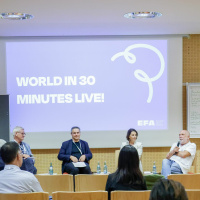
02/09/2022 Duración: 31minGlobal crises – from the covid-19 pandemic and climate change to Russia's war on Ukraine have challenged the core tenets of the globalised world. Europe has been at the centre of this upheaval. And the continent now faces tough decisions on its energy markets, trade partnerships, and supply chains. In this special episode, recorded in front of a live audience at the European Forum Alpbach in Austria, Mark Leonard is joined by co-chair of ECFR, Carl Bildt, Austrian federal minister for the EU and constitution, Karoline Edtstadler, and non-resident fellow at Bruegel, Thomas Wieser. Together, they discuss how to strike the right balance between the need for sovereignty and the benefits of globalisation. What are the biggest threats to the European market economies and what are the opportunities? Will Europeans learn from Russia’s weaponisation of energy when it comes to its dependencies on China? And is there a way to ‘disarm’ connectivity? This podcast was recorded live at the European Forum Alpbach on 1 Septe
-
![Another world is possible: The transformative power of political imagination]()
Another world is possible: The transformative power of political imagination
12/08/2022 Duración: 31minIn his recent book “Another World Is Possible”, Geoff Mulgan – professor of collective intelligence, public policy, and social innovation at University College London – identifies a crisis that does not usually feature prominently in threat assessments: an absence of political imagination. This deficit has not only distorted policymakers’ sense of the past and present but also weakened their ability to make future-proofed decisions in various areas. In this week’s episode, Mulgan joins Mark Leonard to explore the causes and consequences of this crisis. They discuss how to restore imagination and harness creativity to solve current and future problems. Why does the idea of utopia matter? How can we harmonise competing narratives about the future? And where do China and India come in to all this?This podcast was recorded on 6 July 2022.Further readingAnother World Is Possible: How to Reignite Social and Political Imagination by Geoff Mulgan: https://buff.ly/3A1xUgd The Ministry for the Future by Kim Stanley Rob
-
![Machtwechsel: The new generation of German politicians]()
Machtwechsel: The new generation of German politicians
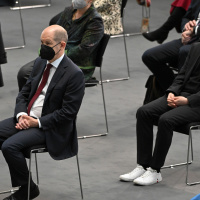
05/08/2022 Duración: 33minGermany's ‘traffic light’ coalition has ushered in a new age of German politics – and a new generation of political figures. Last year, in a departure from the staid Merkel era, German citizens elected a parliament that is less ‘pale, male, and stale’ than ever before. The new cabinet reflects this change – in terms of youth and gender at least. In this week’s episode, Mark Leonard, interviews the German author and journalist, Anna Sauerbrey. They discuss her latest book, “Machtwechsel” (Change of Power), in which she analyses how this diverse intake is challenging the status quo of German politics. But how does Chancellor Olaf Scholz fit in? What is a ‘Zeitgenosse’? And what do white sneakers have to do with anything? This podcast was recorded on 6 July 2022. Further reading - Machtwechsel by Anna Sauerbrey: https://buff.ly/3Spm5au - War and Indignation by Jürgen Habermas in Süddeutsche Zeitung: https://buff.ly/3BCQKvb - A Millennial considers the new German Problem after 30 Years of Peace by Ulrike Frank
-
![Winter is coming: Europe’s energy transition and the war in Ukraine]()
Winter is coming: Europe’s energy transition and the war in Ukraine
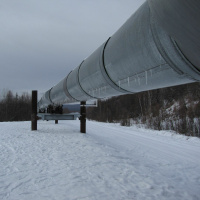
29/07/2022 Duración: 30minAs blistering heatwaves and raging forest fires sweep across Europe, climate change is once again back on the agenda. But Russia’s attack on Ukraine and the consequent reduction in energy supplies to Europe has greatly complicated Europe’s green transition. Some observers argue that a cold-turkey withdrawal from Russian fossil fuels will speed up the transition to renewable energy, but others predict that climate goals will fall by the wayside as European leaders turn to coal and whatever else is available to make up for the lack of Russian oil and gas. In this week’s episode, Jeremy Shapiro, ECFR’s research director seizes the reins of power as host from a vacationing Mark Leonard and talks to Susi Dennison, director of ECFR’s European Power programme, and Simone Tagliapietra, senior fellow at Bruegel about these competing narratives. Will Europe manage to maintain unity as winter approaches? What does this mean for its efforts in climate diplomacy? This podcast was recorded on 19 July 2022. Further reading
-
![The Power of Crisis with Ian Bremmer]()
The Power of Crisis with Ian Bremmer
22/07/2022 Duración: 27minIan Bremmer wrote his latest book before Russia's all-out invasion of Ukraine. Yet, ‘The Power of Crisis’, which went into press on 26 February 2022, identifies three transformational global challenges besides the war: public health emergencies, the technological revolution, and climate change. In today's podcast, Bremmer joins Mark Leonard to discuss the concept of a “goldilocks” crisis, the effects of the covid-19 pandemic, and Europe’s role in global upheavals. How can Europeans learn to survive and even thrive during current and forthcoming crises? And how can countries cooperate effectively in an age of great power competition?This podcast was recorded on 13 June 2022.Further reading- The Power of Crisis by Ian Bremmer https://buff.ly/3uKRbzdBookshelf - The Body Scout by Lincoln Michel Hosted on Acast. See acast.com/privacy for more information.
-
![Ukraine in the age of unpeace with Fiona Hill]()
Ukraine in the age of unpeace with Fiona Hill
15/07/2022 Duración: 57minIn July, Mark Leonard launched the newly released paperback edition of his book - "The Age of Unpeace: How Connectivity Causes Conflict" (Penguin) - with a brand-new essay on the war in Ukraine and its geopolitical impact. Together with Fiona Hill, senior fellow at Brookings, and Jason Cowley, editor-in-chief of the New Statesman, he discusses a new way of looking at the origins of the war in Ukraine, the way it is being conducted and the implications for global (geo-)politics. Is the “Age of Unpeace” just another term for a cold war? And will global challenges – like climate change – in the end still bind us together? Or does the “Unpeace” era make us even less able to tackle those? The material for this podcast was recorded on 8 July 2022. Available here: https://buff.ly/3RAyiZCLearn more about “The Age of Unpeace”: - https://soundcloud.com/ecfr/age-of-unpeace - https://www.politico.eu/article/welcome-to-the-age-of-unpeace-geopolitics-conflict/ Bookshelf - There Is Nothing for You Here: Finding Opportun
-
![Can the Iran nuclear deal be saved?]()
Can the Iran nuclear deal be saved?
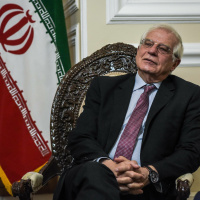
08/07/2022 Duración: 32minEU foreign policy chief Josep Borrell’s visit to Teheran in June was meant to revitalise negotiations around the Iran nuclear deal. But the talks, which recently resumed in Doha, remain mired in mistrust and intransigence from both sides. For this week’s podcast, Mark Leonard has assembled a team of Iran experts to take stock of the negotiations in Qatar: ECFR senior policy fellow, Ellie Geranmayeh; former Iranian diplomat and security and nuclear policy specialist at Princeton University, Hossein Mousavian; professor of Middle East studies and international affairs, Vali Nasr; and the director of International Crisis Group's Iran project, Ali Vaez discuss the latest developments and evaluate different possible outcomes and their consequences. Is there any chance of breaking the stalemate without escalation? And what will be the impact of the upcoming midterm elections in the US? This podcast was recorded on 1 July 2022. Further reading:- Borrell in Tehran: How to overcome three obstacles to the Iran nuclear
-
![The NATO Summit and the future of European Defence]()
The NATO Summit and the future of European Defence
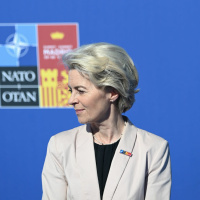
01/07/2022 Duración: 34minNATO members emerged from their summit in Madrid this week having reached consensus on a new Strategic Concept, Sweden’s and Finland’s accession, and increased readiness capabilities on the eastern flank. This week, Mark Leonard is joined by Nick Witney, senior policy fellow at ECFR and former chief executive of the European Defence Agency; Jana Puglierin, head of ECFR’s Berlin office; and Tara Varma, head of ECFR’s Paris office, to evaluate the summit’s outcomes, especially regarding European defence. How can Europeans coordinate increased military expenditure? What is the European Defence Union? And was Nick Witney right to describe the summit as “the most promising conjunction of planets”? This podcast was recorded on 1 July 2022.Further reading:- NATO’s new Strategic Concept - The EU’s Strategic Compass Bookshelf:- The Way We Live Now by Anthony Trollope - Au café de la ville perdue by Anaïs Llobet - The NATO summit is chance to wean Europe off US military might- Machtwechsel by Anna SauerbreyCover image
-
![Lessons for a post-Ukraine world with Fareed Zakaria]()
Lessons for a post-Ukraine world with Fareed Zakaria
24/06/2022 Duración: 34minIn his recently published book, Fareed Zakaria, television host, columnist, and chair of the recently established International Strategy Forum, outlines the main pillars, trends and fault lines of a post-pandemic world. He joins Mark Leonard to discuss the political, geopolitical, and geo-economic changes to the world order. How did the world react to the war on Ukraine? What are the reactions to these reactions? Will globalisation be replaced by fragmentation?This podcast was recorded on 21 June 2022.Further reading:- Ten Lessons for a Post-Pandemic World by Fareed Zakaria: https://buff.ly/3tZQBgO - ECFR’s and Schmidt Futures’ International Strategy Forum: https://buff.ly/3nfeU6CBookshelf: - The Avoidable War — averting a conflict between the US and China by Kevin Rudd- Middlemarch by George Eliot- Dominion by Tom Holland Hosted on Acast. See acast.com/privacy for more information.
-
![Peace versus Justice: The coming European split over the war in Ukraine]()
Peace versus Justice: The coming European split over the war in Ukraine
17/06/2022 Duración: 30minNew ECFR research captures European public opinion on Russia's war against Ukraine. It reveals that Europe's remarkable unity in the early days of the war is under threat from an emerging split – between those who want peace as soon as possible and those who favour justice for Ukraine.This week, senior policy fellow and head of ECFR's European Power programme, Susi Dennison, turns the tables on one of the report's authors, Mark Leonard, as he becomes a guest on his own podcast. They are joined by Leonard's co-author, ECFR founding board member and chair of the Centre for Liberal Strategies, Ivan Krastev to discuss the results of the poll and examine what this means for the European response to the war. What should European leaders do to bridge the fault lines and maintain unity? And how important is Ukraine’s EU membership application? Hosted on Acast. See acast.com/privacy for more information.
-
![The European Sovereignty Index #FactsThatMatter]()
The European Sovereignty Index #FactsThatMatter
10/06/2022 Duración: 33minThis week, ECFR launched its European Sovereignty Index. The index scores the EU and its member states on their contribution to European sovereignty, highlighting strengths and weaknesses, and uncovering regional divisions. Hosting this week's episode, ECFR's research director, Jeremy Shapiro, is joined by two researchers of the index – ECFR policy fellow, Pawel Zerka, and senior policy fellow and head of ECFR's European Power programme, Susi Dennison. They discuss their main findings – as well as some surprising results, trends, and developments. How will the European sovereignty effort progress and which areas need the most work? How can the EU and member states close the gap between ambition and capability in their quest for European sovereignty?This podcast was recorded on 9 June 2022Further reading :European Sovereignty Index https://t.co/xepxnkA16L Bookshelf:- Time Shelter by Georgi Gospodinov- This Is How They Tell Me the World Ends by Nicole Perlroth- The hundred-year war for American conservatism
-
![White privilege in international relations]()
White privilege in international relations
03/06/2022 Duración: 35minChandran Nair, CEO and founder of the Global Institute for Tomorrow (GIFT) argues in his latest book that dismantling white privilege will require deconstructing the entire superstructure of international relations. So, what is white privilege and how deeply is the idea of the superiority of white people and Western culture interwoven into international relations? How does white privilege manifest itself in current international relations issues like the Ukraine war? Together with Mark Leonard, Nair talks about the origins, realities and futures of white privilege. This podcast was recorded on 2 June 2022.Further reading- Dismantling global white privilege: Equity for a post-Western world by Chandran Nair- Chandran Nair on white privilege in international relations by Shannon Tiezzi in The Diplomat- A new imperial alliance threatens peace in Asia in by Chandran Nair in Noema MagBookshelf:- Last night I dreamed of peace: The diary of Dang Thuy Tram by Đặng Thùy Trâm Hosted on Acast. See acast.com/privacy for
-
![The new Davos man: Ukraine, energy, and global powers]()
The new Davos man: Ukraine, energy, and global powers
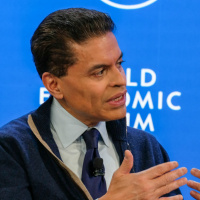
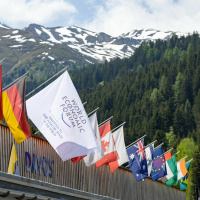
27/05/2022 Duración: 27minThree months into Russia’s war on Ukraine, social, economic, and political leaders from across the globe retreated to Davos in the Swiss alps to discuss how to set about creating a brighter future for the world. Recording from the heart of the World Economic Forum, Mark Leonard is joined this week by Yara Bayoumy, world and national security editor at the New York Times opinion section, to dissect the impulses that weaved in and out of this weekend’s discussions. What were this forum’s biggest themes? Which discussions on the Ukraine crisis were the most convincing? And what balance was there between the West and the rest?This podcast was recorded on 26 May 2022Bookshelf:- "Our Country Friends" by Gary ShteyngartPicture (c) World Economic Forum / Benedikt von Loebell Hosted on Acast. See acast.com/privacy for more information.
-
![European solidarity and the Russia-Ukraine war]()
European solidarity and the Russia-Ukraine war
20/05/2022 Duración: 32minRussia’s war on Ukraine has led to an unprecedented display of European unity. But the European Union now faces a daunting combination of migration, food, military, and energy crises. Assembling an all-star cast at ECFR’s annual staff retreat in Malaga, host Mark Leonard is joined by senior policy fellows Marie Dumoulin, director of the Wider Europe programme, Piotr Buras, head of the Warsaw office, and Arturo Varvelli, head of the Rome office, to discuss Europe’s solidarity on the war in Ukraine. How sustainable is European unity? What scenarios of solidarity or division can be expected in the next few months? And what factors matter most to different EU member states? This podcast was recorded on 19 May 2022 Hosted on Acast. See acast.com/privacy for more information.
-
![Germany’s Zeitenwende: what does it mean for Europe?]()
Germany’s Zeitenwende: what does it mean for Europe?
13/05/2022 Duración: 33minGerman chancellor, Olaf Scholz, is facing criticism for not meeting the expectations he created with his Zeitenwende speech. But how fair is this criticism? Mark Leonard ponders this question and others with some of his German colleagues: ECFR senior policy fellows Janka Oertel and Jana Puglierin, and policy fellow and head of ECFR’s Task Force for Strengthening Europe against Economic Coercion, Jonathan Hackenbroich. How is Germany actually doing in turning round its security and defence policies? And what kind of change is afoot in Germany’s most beloved field, economic policy? This podcast was recorded on 11 May 2022.Further reading:- How Germany can sustain its policy revolution by Rafael Loss, Angela Mehrer: https://buff.ly/3hE5PBv- Zeitenwende: Germany as a pioneer in foreign and security policy? https://buff.ly/3sAo7K7- The birth of a geopolitical Germany by Jonathan Hackenbroich, Mark Leonard: https://buff.ly/3soxQmJBookshelf:- BBC Radio 4 Desert Island Discs with Fiona hill - China’s Ukraine Conundru
-
![The age of the strongman]()
The age of the strongman
06/05/2022 Duración: 29minThe world is currently focused on one strongman: Putin. Yet strongmen are threatening democracies across the globe. Mark Leonard is joined this week by chief foreign policy commentator at the Financial Times, Gideon Rachman, to dissect the latter's recently published book “The Age of the Strongman”. They discuss such questions as what defines a strongman, and what varieties of this curious species exist? Are there any strongwomen? And when did the age of strongmen really begin?This podcast was recorded on 28 April 2022.Further reading:The Age of the Strongman by Gideon RachmanThe rise and risks of “The Age of the Strongman” “The Age of The Strongman by Gideon Rachman review – a rogues gallery of autocrats” by Simon TisdallBookshelfStrongmen: Mussolini to the Present by Ruth Ben-GhiatAmerica Second by Isaac Stone Fish Hosted on Acast. See acast.com/privacy for more information.
-
![A European Confederation: a common political platform for peace]()
A European Confederation: a common political platform for peace
29/04/2022 Duración: 30minAs Russia undermines democracies and reduces Ukrainian territory to a mere power play, European ideology is flourishing more than ever before. In this week’s episode, Mark Leonard hosts Enrico Letta, former Prime Minister of Italy and current President of the Jacque Delors Institute, to discuss his solution to the EU’s problems: a European Confederation. Nations such as Ukraine, Georgia, and Moldova want the security of EU membership, but how likely are they to be accepted into the union? How could a European Confederation aid greater cross-European integration? And is it a realistic alternative to the EU?This podcast was recorded on 28 April 2022.Further reading:- “A European Confederation: a common political platform for peace” by Enrico Letta- “The EU moves together on the total embargo on Moscow, says Enrico Letta” by the Observatorial- “Letta for a federal Europe” by Roberto CastaldiBookshelf:- The Man Inside: A European Journey Through Two Crises by Marco Buti Hosted on Acast. See acast.com/privacy for
-
![New era, new alliance: NATO, Sweden, and Finland]()
New era, new alliance: NATO, Sweden, and Finland
22/04/2022 Duración: 30minAs Russia shifts the focus of its military offensive to southern and eastern Ukraine, Finland and Sweden are moving closer to NATO membership. In this week’s episode, Mark Leonard speaks to Carl Bildt, former prime minister of Sweden and current ECFR co-chair, and Alexander Stubb, former prime minister of Finland and current ECFR council member. Beyond both countries’ expressions of intent, where do they stand on NATO membership? What can Sweden and Finland offer NATO? And are they worried about the Kremlin’s threats to attack their countries? This podcast was recorded on 21 April 2022. Further reading: - Between Russia, Sweden, and NATO: Finland’s defence of “sovereignty equality” by Hanna Ojanen - How the Russia-Ukraine crisis could change Sweden’s security policy by Mats Engström - “Whoever shows weakness, will be attacked” by Francesco Collini Bookshelf:- The Unknown Soldier by Väinö Linna - Ravenna: Capital of Empire, Crucible of Europe by Judith Herrin - The New Age of Empire by Kehinde Andrews Hosted
-
![What a Le Pen presidency would mean for Europe and the world]()
What a Le Pen presidency would mean for Europe and the world
15/04/2022 Duración: 31minEmmanuel Macron and Marine Le Pen will face off against each other in the second round of the French presidential election on April 24. We have a good idea of what a second Macron presidency would look like, but Marine Le Pen is another story all together. How would her presidency affect Europe and the world? Jeremy Shapiro – seizing the reins of the podcast this week from a complaisant Mark Leonard – will explore this question with Agneska Bloch, a senior research assistant at a DC-based think tank, where she works on European affairs.This podcast was recorded on 14 April 2022.Further reading:All ECFR analysis on the French election: https://ecfr.eu/topic/france-2022/ Bookshelf:- East West Street by Philippe Sands - My Brilliant Friend by Elena Ferrante Hosted on Acast. See acast.com/privacy for more information.