Sinopsis
Foreign policy podcasts hosted by Mark Leonard, Director of the European Council on Foreign Relations (ECFR), the first pan-European think-tank.
Episodios
-
![Keeping America close, Russia down, and China far away: How Europeans navigate a competitive world]()
Keeping America close, Russia down, and China far away: How Europeans navigate a competitive world
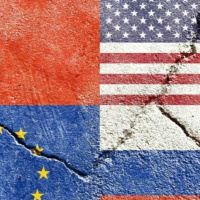
16/06/2023 Duración: 32minEuropean citizens are adapting slowly to the new geopolitical landscape. But leaders have an opportunity to build public consensus on the EU’s approach to China, the US, and Russia. ECFR’s latest polling report – based on data from 11 EU member states – analyses what European citizens think about Europe’s place in the world and its relationship to these other powers. In this week’s episode, Mark Leonard welcomes the two authors of the report: Jana Puglierin, senior policy fellow and head of ECFR’s Berlin office, and Pawel Zerka, senior policy fellow at ECFR, to discuss and analyse their results. What kind of relationship do Europeans want with Russia? How do they understand China’s growing influence? And what do they expect from the future of transatlantic relations? This podcast was recorded on 14 June 2023. Bookshelf: - Andrew Small, No Limits: The Inside Story of China´s War with the West - Timothy Garton Ash, Homelands: A Personal History of Europe -Georgi Gospodinov, Time Shelter Hosted on Acast.
-
![Democracy in the age of polycrisis with Adam Tooze]()
Democracy in the age of polycrisis with Adam Tooze
09/06/2023 Duración: 35minThis week, European decision-makers and opinion-shapers gathered in Stockholm for ECFR´s annual council meeting.There, they discussed how democracy might survive the complex interaction of multiple overlapping crises: from covid-19 to climate change and Russia´s war on Ukraine.In this week´s episode, Mark Leonard welcomes ECFR trustee and director of the European Institute and professor of history at Columbia University, Adam Tooze, to examine the notion of polycrisis.What exactly does the term polycrisis mean, and what does it tell us about the present realities affecting Europe? Can we talk about “an age of polycrisis”? And how will the polycrisis shape global dynamics and the future of the European continent?This podcast was recorded on 8 June 2023. Bookshelf :• Phenomenal World, a blog by Kate Mackenzie and Tim Sahayhttps://www.phenomenalworld.org/series/the-polycrisis/ • Leçons d'un siècle de vie, Edgar Morin Hosted on Acast. See acast.com/privacy for more information.
-
![Israeli politics with Merav Michaeli]()
Israeli politics with Merav Michaeli
02/06/2023 Duración: 30minEarlier this month, Israel marked its 75th birthday amid one of the biggest crises of democracy the country has ever experienced. Since returning to power in December last year, prime minister Benjamin Netanyahu has introduced a set of controversial judicial reforms, resulting in mass protests on the streets of Tel Aviv and beyond.This week, Mark Leonard welcomes member of the Knesset and leader of the Israeli Labor Party, Merav Michaeli, to discuss what is at stake with these reforms and how they could affect the country’s global standing. What is behind the waning influence of the left in Israel over the past 20 years? What can be done to reinvigorate the peace process with the Palestinians? And what might the next 75 years have in store for the Israel? This podcast was recorded on 23 May 2023. Bookshelf: The Age of Innocence by Edith Wharton Hosted on Acast. See acast.com/privacy for more information.
-
![The Sudan conflict and its impacts on the region]()
The Sudan conflict and its impacts on the region
26/05/2023 Duración: 33minThe crisis in Sudan is now in its sixth week, with no end in sight. Neither the Sudanese Armed Forces nor the paramilitary Rapid Support Forces have been able to gain decisive victories in the capital, Khartoum. On 22 May, the two sides signed a seven-day ceasefire, sponsored by the United States and Saudi Arabia. So, what are the current scenarios for negotiation, and what role should the West play in this process? This week, Mark Leonard is joined by Theodore Murphy, Julien Barnes-Dacey, and Marie Dumoulin, the heads of ECFR’s Africa, Middle East and North Africa, and Wider Europe programmes. They discuss why stability in Sudan is critical to the Middle East and North Africa, and what is at stake for other politically unsteady countries, such as South Sudan, Ethiopia, and Chad. Is there a risk of regional spillover, and where are the Sudanese refugees going? This podcast was recorded on 22 May 2023. Bookshelf: Putin’s Wars: From Chechnya to Ukraine by Mark Galeotti A Stranger in your own City: Travels i
-
![World order with Ayse Zarakol]()
World order with Ayse Zarakol
19/05/2023 Duración: 27minEven if China’s priorities might be different from those of the West, it embraces many of the ontological assumptions of the current world order. In her recent book “Before the West: The Rise and Fall of Eastern World Order”, Ayse Zarakol conceptualises world order as a non-Western concept and puts forward an alternative model of sovereignty. In this week’s episode of the World in 30 Minutes, Mark Leonard is joined by Ayse Zarakol, author and professor of international relations at the University of Cambridge. They talk about how to define world order, what sort of order we are in today, and what factors eventually cause orders to decline. What could be done to strengthen our current world order? And can we even imagine what would replace it? This podcast was recorded on 16 May 2023. Bookshelf: Before the West: The Rise and Fall of Eastern World Order by Ayse Zarakol Sacred Kingship in World History: Between Immanence and Transcendence by A. Azfar Moin and Alan Strathern Hosted on Acast. See acast.com/priva
-
![The future of European politics]()
The future of European politics
15/05/2023 Duración: 32minA year ahead of the EU elections, commentators are already feverishly speculating about whether Ursula von der Leyen will stay on as president of the European Commission. Meanwhile, others lament the ongoing lethargy of the Franco-German motor. But focusing too much on these questions risks ignoring key players outside the traditional halls of European power, some of whom have been growing in influence. What can these countries and their domestic politics tell us about the future of the EU? In this episode – live from ECFR’s staff retreat in Porto – Mark Leonard welcomes the heads of ECFR’s national offices: Nacho Torreblanca, Arturo Varvelli, Vessela Tcherneva, and Piotr Buras. Has it become harder for the Polish government to attack the EU, given its pro-Ukraine policies? What is the status of coalition talks in Bulgaria? And how will Spain’s EU presidency shape the political agenda from July to December?This podcast was recorded on 10 May 2023.Bookshelf:And then what?: Inside Stories of 21st Century Diplo
-
![The case for sending fighter jets to Ukraine]()
The case for sending fighter jets to Ukraine
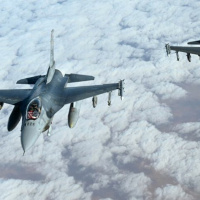
05/05/2023 Duración: 29minIn recent weeks, the conversation on military aid for Ukraine has shifted from battle tanks to fighter jets. Poland and Slovakia have already delivered Soviet-era MiG-29s, and Ukraine's leaders have repeately called for the West also to supply modern jets. As with tanks, a decision from the US to supply its own fighters to Kyiv could be highly influential for European governments. This week, Mark Leonard welcomes ECFR senior policy fellow, Gustav Gressel, whose recent commentary argues that Ukraine’s allies should supply fighter jets to Ukraine as quickly as possible. But would they arrive in time for the anticipated Ukrainian counter-offensive? How would Putin respond? And what are the risks of escalation? This podcast was recorded on 3 May 2023. Bookshelf: Faustian Bargain. The Soviet-German Partnership and the Origins of the Second World War by Ian Ona Johnson The case for sending fighter jets to Ukraine by Gustav Gressel Hosted on Acast. See acast.com/privacy for more information.
-
![How the West should prepare for the Turkish elections]()
How the West should prepare for the Turkish elections
28/04/2023 Duración: 36minDespite being a NATO member, Turkey has stayed neutral in the war in Ukraine and continues to block Sweden’s accession to the alliance. Yet, Turkey's president, Recep Tayyip Erdogan, is better known domestically for his economic mismanagement and shoddy response to the earthquake that killed 60,000 people in February than his government's increasingly aggressive international strategy. Presidential and parliamentary elections on 14 May could even raise the prospect of a Turkey without Erdogan. In this episode, Mark Leonard welcomes ECFR’s research director Jeremy Shapiro and associate senior policy fellow Asli Aydintasbas who have just published a commentary on how the West should prepare for the Turkish elections. Can the opposition unity candidate Kemal Kilicdaroglu pull off a victory? What would a post-Erdogan EU-Turkey relationship look like? And could Turkey's EU accession negotiations restart? This podcast was recorded on 27 April 2023. Bookshelf: The Keys to Democracy: Sortition as a New Model for Ci
-
![Macron and Europe: the French vision for strategic autonomy]()
Macron and Europe: the French vision for strategic autonomy
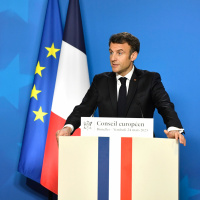
21/04/2023 Duración: 34minLast week, France’s president Emmanuel Macron threw the EU bubble into turmoil by suggesting that Europe should not become the United States’ “vassal” over Taiwan. But is the controversy overshadowing the possibility that he could be right? This week, Mark Leonard welcomes two ECFR colleagues: director of the Wider Europe programme and former French diplomat, Marie Dumoulin, and head of the Paris office and expert in French and US foreign policy, Célia Belin. . What explains Macron’s way of thinking and is there a domestic context to his comments? And what do the strong reactions say about how Europeans view strategic autonomy in the context of the war in Ukraine? This podcast was recorded on 17 April 2023. Bookshelf: The Cat and the General by Nino Haratischwili Living with our Dead by Delphine Horvilleur Hosted on Acast. See acast.com/privacy for more information.
-
![The US, Europe, and the art of vassalisation]()
The US, Europe, and the art of vassalisation
14/04/2023 Duración: 40minAlthough European leaders have stepped up in many ways to support Ukraine, the war has also laid bare Europe’s profound dependence on the United States. This reality was at the heart of French president Emmanuel Macron’s recent call for more “strategic autonomy”, which stirred a new debate over the transatlantic power imbalance. It was also the topic of a new publication, “The Art of Vassalisation”, from ECFR’s research director, Jeremy Shapiro, and senior policy fellow and head of the Berlin office, Jana Puglierin, who join week Mark Leonard for this week’s episode. What factors influence “vassalisation”, and is it really more beneficial for the Americans? And how seriously are Europeans taking the risk of a Republican victory in 2024? This podcast was recorded on 3 April 2023. Please note that we adapted the introduction to Macron’s interview on 9 April, but some views of our experts might be outdated. An in-depth analysis of the current events will soon follow in an extra episode. Bookshelf:-Revanche: Wie
-
![Hungary’s strategy of connectivity]()
Hungary’s strategy of connectivity
07/04/2023 Duración: 37minFrom the rise of China and Russia’s invasion of Ukraine to more independent middle and regional powers – our global political order is rapidly changing. But what is Hungary’s position in this increasingly multipolar world?In this week’s episode, Mark Leonard is joined by Balazs Orban, the political director of Hungarian prime minister Viktor Orban. (They are not related.) Balazs is also the chair of the board at the Mathias Corvinus Collegium and in 2021 wrote a book called “The Hungarian Way of Strategy”, in which he describes the country’s “strategy of connectivity”. How does the European Union fit into this vision? And what kind of relationship does Hungary expect to have with Russia when the war eventuallycomes to an end? This podcast was recorded on 20 March 2023. Bookshelf: The Hungarian Way of Strategy by Balázs Orbán Leadership: Six Studies in World Strategy by Henry Kissinger Nationale Interessen: Orientierung für deutsche und europäische Politik in Zeiten globaler Umbrüche by Klaus von Dohnanyi Hos
-
![China and Russia: a friendship without limits]()
China and Russia: a friendship without limits
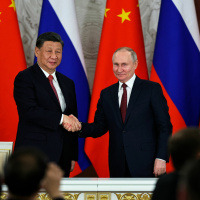
31/03/2023 Duración: 32minLast week, the Chinese leader Xi Jinping completed a three-day visit to Moscow, his first since Russia's full-scale invasion of Ukraine. Before the war, Xi and Vladimir Putin had famously announced a “friendship without limits”. But it is unclear whether that relationship is purely transactional, a marriage of convenience, or based on more fundamental, ideological factors. In this week’s episode, Mark Leonard is joined by the director of ECFR's Asia programme, Janka Oertel, and ECFR policy fellow, Alicja Bachulska, to discuss China-Russia relations. How best to explain the “friendship without limits”? What are the key takeaways from Xi's Russia trip? And how has Xi's embrace of Putin been perceived in central and eastern Europe? This podcast was recorded on 28 March 2023. Bookshelf: Our Share of Night: a novel by Mariana Enriquez Economists at War: how a handful of Economists helped win and lose the World Wars by Allan Bollard Hosted on Acast. See acast.com/privacy for more information.
-
![The Iran-Saudi deal and its impact]()
The Iran-Saudi deal and its impact
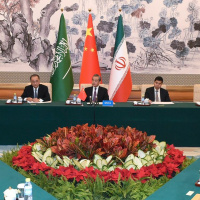
24/03/2023 Duración: 34minLast week, China helped broker an agreement between long-feuding Saudi Arabia and Iran to begin the process of normalising their relations. Both the deal and China’s role surprised many observers – especially in the West. So, how significant is the agreement, and what consequences will it have for the Middle East? To address this and other questions, Mark Leonard welcomes Julien Barnes-Dacey, director of ECFR’s Middle East and North Africa programme; Cinzia Bianco, ECFR visiting fellow and Gulf expert; and Andrew Small, China expert and senior transatlantic fellow at the German Marshall Fund. Does this deal mean Beijing could play a constructive role in ending the war in Ukraine? Or should the United States be alarmed that China is encroaching on its traditional sphere of influence? This podcast was recorded on 22 March 2023. Bookshelf: Aftermath: Life in the Fallout of the Third Reich, 1945-1955 by Harald Jähner Berlin: The Story of a City by Barney White-Spunner Economists at War: How a Handful of Econo
-
![German foreign policy with Christoph Heusgen]()
German foreign policy with Christoph Heusgen
17/03/2023 Duración: 34minThis week, Mark Leonard welcomes Christoph Heusgen, longstanding foreign policy chief during the Merkel years and now chair of the Munich Security Conference. They discuss Western and non-Western reactions to the war in Ukraine – and, in particular, the role of Germany. Should Berlin have taken a harder line against Russia after 2014? How can Scholz realise his vision for the Zeitenwende? And what is stopping Germany from engaging more in developing countries? This podcast was recorded on 13 March 2023. Bookshelf: The Age of Unpeace: How Connectivity Causes Conflict by Mark Leonard Führung und Verantwortung: Angela Merkels Außenpolitik und Deutschlands künftige Rolle in der Welt by Christoph Heusgen Hosted on Acast. See acast.com/privacy for more information.
-
![James O’Brien on sanctions]()
James O’Brien on sanctions
10/03/2023 Duración: 38minA year into the war in Ukraine, economic sanctions remain the West’s strongest instrument against Russia. But the Russian economy has proven surprisingly resilient: Russia still sells oil to Turkey and China, and – according to a recent investigation by The Economist and SourceMaterial – the Kremlin’s sanctions-dodging is becoming increasingly advanced. This week, Mark Leonard is joined by James O’Brien, head of the office of sanctions coordination at the US State Department, to discuss the efficacy of economic sanctions. What ripple effects have sanctions had for Western and third countries? Is the United States currently mulling sanctions against China? And what alternatives are there, if sanctions no longer work as intended?This podcast was recorded on 6 March 2023.Bookshelf-Backfire by Agathe Demarais-Russia’s sanctions-dodging is getting ever more sophisticated by The Economist and SourceMaterial -Talking to Terrorists by Jonathan Powell-We Don’t Know Ourselves by Fintan O’Toole-The Baseball 100 by Joe P
-
![The crisis of democratic capitalism with Martin Wolf]()
The crisis of democratic capitalism with Martin Wolf
03/03/2023 Duración: 33minSome analysts argue that capitalism would work better without democracy, while others believe that democracy would be better off without capitalism – so what’s the solution? In his new book “The crisis of democratic capitalism”, Martin Wolf, chief economics commentator at the Financial Times, sets out how they actually need one another if either is to thrive. In this week’s episode, host Mark Leonard welcomes Wolf to discuss what democratic capitalism is all about and how it is threatened by two distinct authoritarian versions of capitalism. What does all this mean for the development of democracy and capitalism in developing and emerging economies? And what are the chances that democratic capitalism will remain the model to which countries around the world aspire?This podcast was recorded on 10 February 2023. Bookshelf - The crisis of democratic capitalism by Martin Wolf - Slouching towards utopia by J. Bradford DeLong Hosted on Acast. See acast.com/privacy for more information.
-
![United West, divided from the rest: Global public opinion one year into Russia’s war on Ukraine]()
United West, divided from the rest: Global public opinion one year into Russia’s war on Ukraine
24/02/2023 Duración: 32minA major new public opinion poll from ECFR indicates that, a year into Russia's war on Ukraine, the Western alliance is consolidating – but that there are divisions between the West and other global powers. These divergences range from their views of the conflict to their interpretations of democracy and their ambitions on the world stage. In this week's episode, the authors of the research – Mark Leonard, Timothy Garton Ash, and Ivan Krastev – discuss its main findings and the future of the world order. Does Europe have a strong role to play in a multipolar world, or will it forever live in the United States’ shadow? How can the West use the desire in emerging powers to act on their own terms to its advantage? And what principles should drive Europe’s engagement with those countries?This podcast was recorded on 18 February 2023.Further reading- United West, divided from the rest: Global public opinion one year into Russia’s war on Ukraine by Timothy Garton Ash, Ivan Krastev & Mark Leonard https://ecfr.eu
-
![Live from the Munich Security Conference: Where is world politics turning?]()
Live from the Munich Security Conference: Where is world politics turning?
20/02/2023 Duración: 27minRussia’s invasion of Ukraine upended many Western leaders’ previous assumptions about security policy, warfare, and the international order. Mark Leonard and his ECFR colleagues Camille Grand, Jana Puglierin, and Ulrike Franke got together at the Munich Security Conference (MSC) last weekend to discuss the dramatic changes – such as Germany's Zeitenwende – that have taken place as a result of these revisions. They analyse MSC speeches from Volodymir Zelensky, Olaf Scholz, and Emmanuel Macron, as well as the announcement of a plan for peace talks by China's top diplomat Wang Yi. What is on the transatlantic to-do list? And how can the West forge more and better alliances with countries in the global south? This podcast was recorded on 17 February 2023.Further reading: - The Munich Security Report 2023 Bookshelf: - Au café de la ville perdue [FR] by Anaïs Llobet - Les Loups [FR] by Benoît Vitkine Hosted on Acast. See acast.com/privacy for more information.
-
![How Putin created the most threatening regime in the world – with Michael Thumann]()
How Putin created the most threatening regime in the world – with Michael Thumann
10/02/2023 Duración: 31minThis week, Mark Leonard is joined by Michael Thumann, foreign affairs correspondent for the German weekly newspaper Die ZEIT, longtime expert on Russia, and one of the only German correspondents still reporting from Moscow. Following the publication of Thumann’s new book, “Revanche. Wie Putin das bedrohlichste Regime der Welt geschaffen hat” (“Revenge: How Putin created the most threatening regime in the world”, currently only available in German), he and Leonard discuss the roots of the Russian regime’s imperialistic behaviour. What is the relevance of Vladimir Putin’s interpretation of Russian history? Could Russia become a ‘normal country’ in the future? And how have Germans’ views of Russia changed since its full-scale invasion of Ukraine?This podcast was recorded on 1 February 2023.Further reading:- Revanche by Michael Thumann [available only in GER]: https://buff.ly/3lppnPn - The old is dying and the new cannot be born: A power audit of EU-Russia relations by Kadri Liik: https://t.co/W42ylXEfDp Bookshel
-
![Agathe Demarais on sanctions as a foreign policy tool]()
Agathe Demarais on sanctions as a foreign policy tool
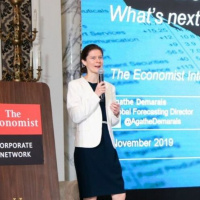
03/02/2023 Duración: 30minOver the last decades, sanctions have become the West’s diplomatic tool par excellence. Faced with wars, humanitarian crises, and human rights violations, the West’s response has often been to impose sanctions to avoid resorting to military force. This week, Mark Leonard invited Agathe Demarais, global forecasting director of the Economist Intelligence Unit and author of “Backfire - How Sanctions Reshape the World Against US Interests”, to talk about how sanctions work and how they can be truly effective. Have the sanctions on Russia been successful? Is there a danger of the West becoming over-reliant on them? And will they eventually be replaced by other economic weapons?This podcast was recorded on 24 January 2023.Further reading-ECFR’s work on geo-economics: https://ecfr.eu/category/europeanpower/economic-sovereignty/ - Backfire: How Sanctions Reshape the World Against U.S. Interests by Agathe Demarais- The global race for semiconductor hegemony with Janka Oertel, Chris Miller and Andrew SmallBookshelf- Wh